Keycap Profiles Decoded: How Cherry, SA, MT3 and Friends Change the Way You Type
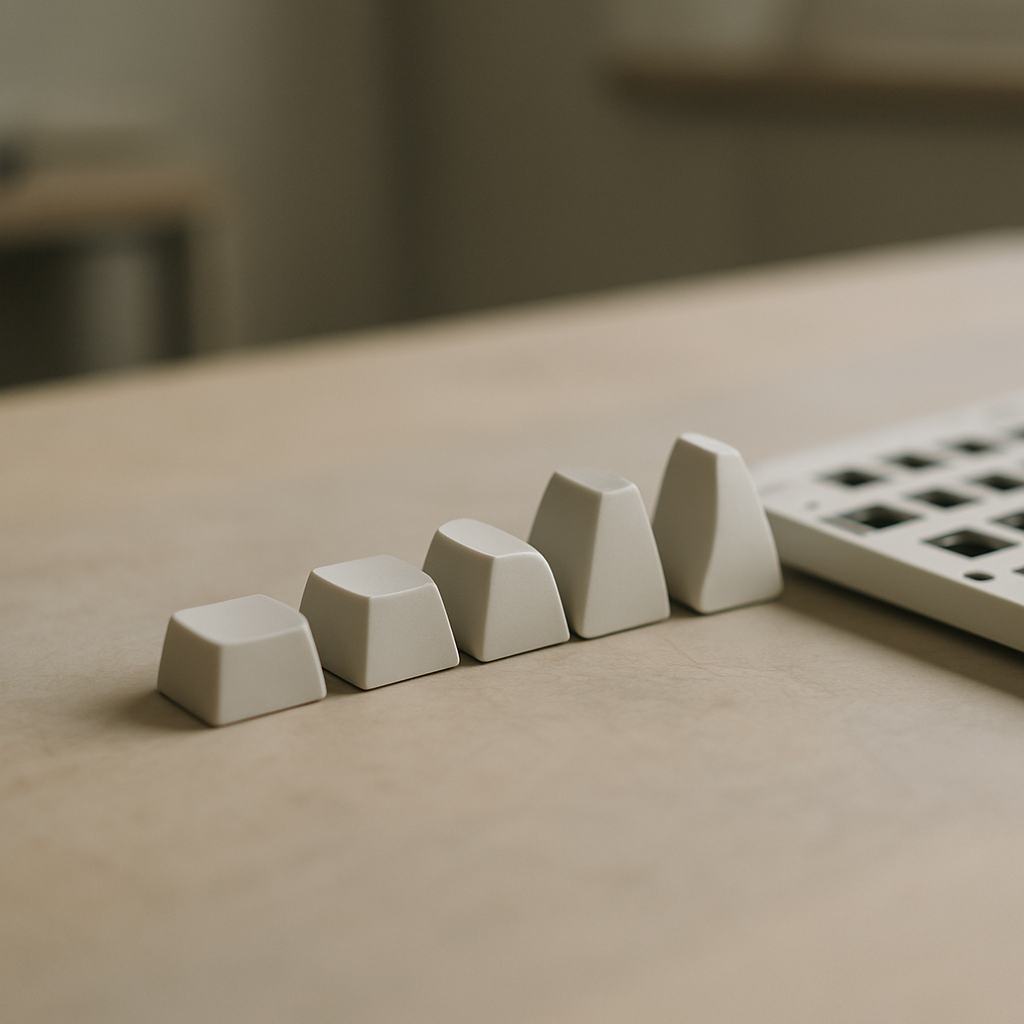
Two keyboards can share the same switches, the same case, and the same plate, yet feel like entirely different instruments — all because of the shape of the plastic under your fingertips. Keycap profiles are one of the most underrated variables in a custom build, and one of the most confusing for newcomers. The names read like a secret code: Cherry, OEM, SA, DSA, XDA, MT3, KAT. Behind each abbreviation sits a distinct philosophy about how a keyboard should meet the hand.
What a Profile Actually Describes
A keycap profile defines two things: the height of the caps and the way that height changes from row to row. Sculpted profiles give each row a different angle and height, creating a curved landscape that cradles the natural arc of your fingers. Uniform profiles make every row identical, producing a flat, tidy plane.
Height matters more than most people expect. Tall caps change the acoustics of a board, adding a deeper, more resonant tone. Short caps bring your fingers closer to the switches and tend to feel quicker. Sculpt affects accuracy: a well-designed curve guides fingers home without looking, which is why touch typists often develop fierce loyalties to particular profiles.
Cherry and OEM: The Sensible Defaults
Cherry profile is the quiet workhorse of the enthusiast world. Low, gently sculpted, with a slightly angled top surface, it is the shape most premium keycap sets are made in, and for good reason — it disappears under your hands. Nothing about it demands adjustment. OEM profile, found on most mass-market boards, is essentially Cherry's taller cousin: same idea, a little more height, a little less refinement.
If you have never thought about profiles before, you have almost certainly been typing on OEM. Moving to Cherry feels like the same language spoken with better diction.
SA and MT3: The Tall Romantics
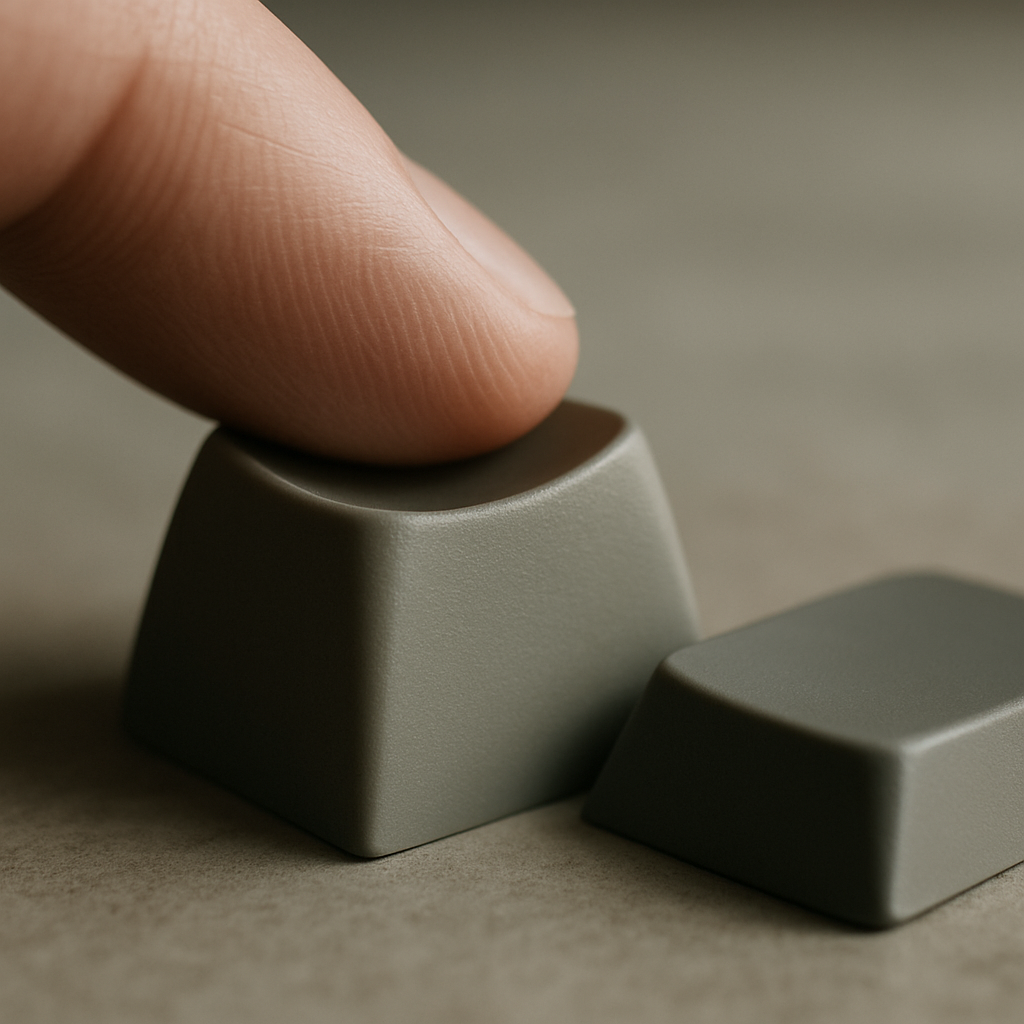
SA profile is where keycaps become sculpture. Towering, dramatically sculpted, with spherical scooped tops, SA caps deliberately echo the terminals and typewriters of the 1960s and 70s. They look magnificent and sound even better — a deep, marbly "thock" that flat profiles simply cannot produce. The trade-off is a learning curve; the height and aggressive sculpt take days to adjust to, and fast typists sometimes never fully settle in.
MT3, designed by Matt3o and produced by Drop, refines the retro idea. It keeps the height and the vintage silhouette but deepens the spherical scoop so each fingertip nests into its key. Fans describe typing on MT3 as tactile in a way no other profile matches, as if the caps were made from a cast of your own hands.
DSA, XDA and KAT: The Uniform Minimalists
Uniform profiles trade ergonomic sculpting for visual purity and flexibility. DSA is short and flat with small spherical tops; XDA is similar but with wider, flatter surfaces that give legends room to breathe. Because every key is the same shape, you can rearrange caps freely — a genuine advantage for users of ortholinear and non-standard layouts where sculpted rows never quite line up.
KAT splits the difference: mostly gentle sculpt, generous smooth tops, and a soft, rounded look that photographs beautifully. Uniform and semi-uniform profiles have become the darlings of minimalist desk setups, where a perfectly level plane of identical caps reads as calm and intentional.
Choosing Without Buying Everything
The honest advice is that no review can tell you which profile your hands will love. But you can narrow the field. If you type for a living and value speed, start with Cherry. If you chase sound and nostalgia and do not mind an adjustment period, SA or MT3 will reward you. If you run an ergonomic or ortholinear board, or you simply love clean geometry, uniform profiles like DSA or XDA make practical sense.
Budget-friendly sampler routes exist too. Inexpensive dye-sub PBT sets are available in most profiles, letting you audition a shape for the price of a takeaway dinner before committing to a premium group buy set. Many enthusiasts keep one board in a tall profile and one in a low profile, switching between them the way a cook switches knives.
The Shape of Personal Taste
Profiles are a reminder that keyboard building is ultimately about the interface between object and body. Switches get the headlines and cases get the glamour shots, but the profile is what your fingers actually live on for hours every day. Once you find the one that fits — and most people know within a week — every other shape starts to feel like borrowed shoes. That moment of recognition, when the keyboard stops being hardware and starts being yours, is what this hobby has always been about.