Gasket, Top Mount or Tray? How Mounting Styles Shape the Soul of a Keyboard
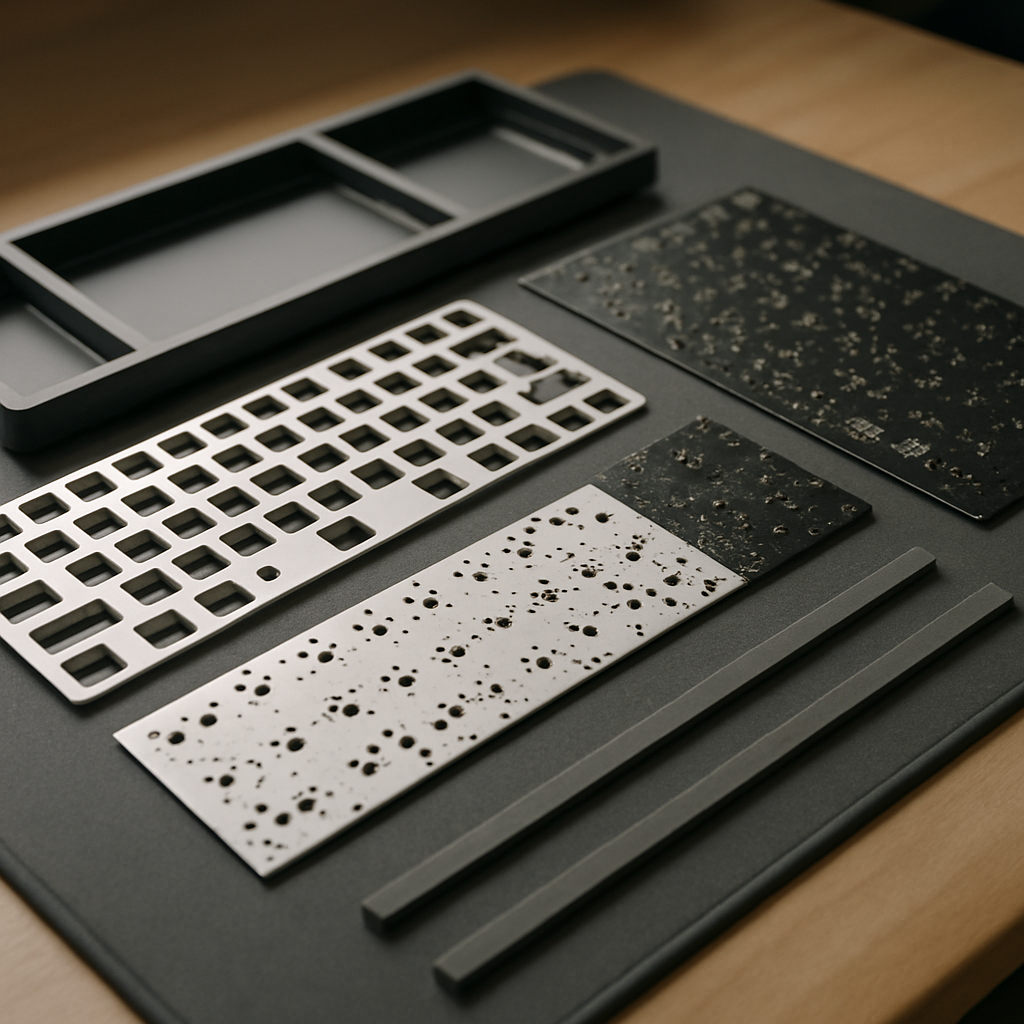
Somewhere between the switches you chose and the case you fell in love with sits a decision most newcomers never notice until it is too late: how the plate and PCB are actually held inside the keyboard. Mounting style is the skeleton of a custom build. It determines whether your board types firm or soft, whether it sounds sharp or muted, and whether the typing feel is uniform across the whole layout or subtly different at the edges. Enthusiasts argue about it endlessly, and for once the arguing is justified.
Why Mounting Matters More Than It Sounds
Every keystroke sends energy downward through the switch, into the plate, and onward into whatever the plate touches. The mounting style decides where that energy goes. A rigid connection transmits force straight into the case, producing a firm, direct feel and a brighter sound. A decoupled, cushioned connection absorbs some of the blow, giving a softer landing and a deeper, quieter acoustic signature.
Neither is objectively better. Writers who type for eight hours often prefer softness; gamers and heavy typists frequently want firmness and precision. The point is that mounting is a genuine design choice, not a manufacturing detail.
Tray Mount: The Humble Starting Point
Tray mount is the style found in most affordable cases: the PCB screws directly into standoffs rising from the bottom of the tray. It is cheap, simple, and serviceable — and famously inconsistent. Because the standoffs sit at fixed points, keys directly above them feel stiffer than keys in the unsupported spans between. Typing across a tray-mounted board can feel like walking on a floor with joists in the wrong places.
The community, being the community, has developed mods to fight this: gaskets cut from adhesive foam, standoffs deliberately left unscrewed, o-rings wedged around the plate in what became known as the burger mount and later inspired the o-ring gasket craze on boards like the KBD67 Lite. Tray mount taught a generation of builders that limitations are just invitations.
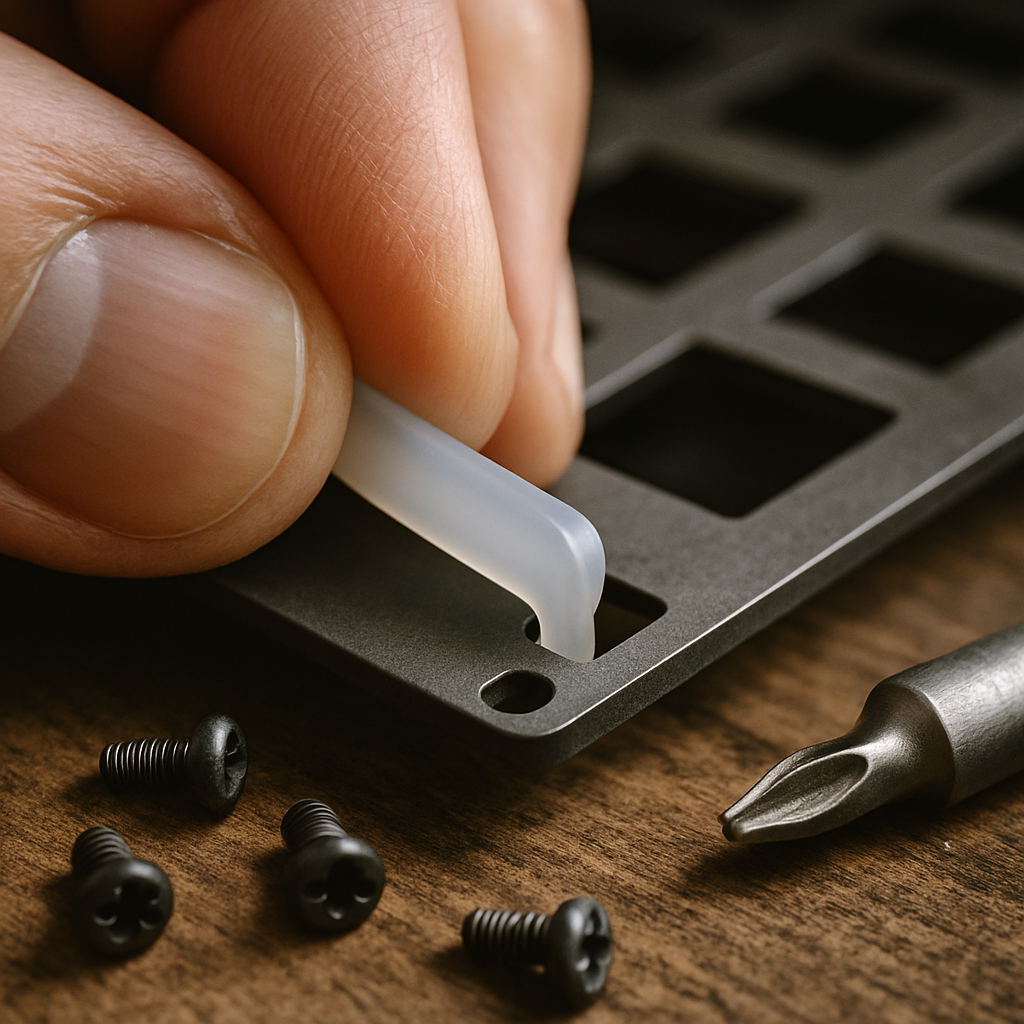
Top Mount: The Enthusiast Classic
In a top-mounted board, the plate screws into the underside of the case's top frame. The result is a feel that many veterans still consider the gold standard: firm in the centre, slightly flexible at the edges, with a consistent, refined sound. Legendary customs built their reputations on well-executed top mount, and plenty of high-end designers quietly returned to it after the market's flirtations with softer systems.
Top mount rewards good engineering. The thickness of the plate, the number of screw points, and the geometry of the top frame all tune the outcome, which is why two top-mounted boards can feel meaningfully different despite sharing a philosophy.
Gasket Mount: The Word That Sold a Thousand Boards
No mounting term has been marketed harder than gasket. In a gasket-mounted board, the plate never touches the case directly; instead, strips of poron, silicone or rubber sandwich the plate's edges between the top and bottom halves. The promise is a cushioned, slightly bouncy typing feel and acoustic isolation from the case.
Done well — with soft gaskets, a flexible plate, and room for movement — the effect is lovely: keystrokes land on something that gives, just a little, like a sprung dance floor. Done poorly, "gasket mount" is a sticker on a board so tightly compressed that it behaves like a rigid one. The label alone guarantees nothing, which is why sound tests and reviews matter more than spec sheets.
The Outliers: Isolation, Leaf Springs and Plateless Builds
Beyond the big three lies the experimental frontier. Isolation mounts suspend the assembly on soft silicone socks. Leaf-spring designs cut flexible tabs into the plate itself, turning the mounting points into springs. Some builders delete the plate entirely, soldering switches directly to the PCB for the softest, most flexible feel possible — a choice that trades structure for a uniquely bouncy, muted character.
These niches exist because mounting is the last great tuning frontier. Switches and keycaps are largely solved problems; how a board is suspended inside its shell still has room for genuine invention.
Choosing Your Skeleton
If you are speccing your first serious build, think in terms of feel first. Want firm and precise? Look for top mount or a stiff gasket implementation with an aluminium plate. Want soft and deep? Seek a true gasket design with a polycarbonate or FR4 plate and visible flex cuts. On a budget? A tray mount board plus an afternoon of modding will get you surprisingly far.
Mounting style is invisible in photographs and absent from most spec-sheet comparisons, yet it defines the board more than almost anything else. It is the difference between a keyboard that merely looks custom and one that feels like it was built around your hands.