Less Board, More Craft: The Strange Appeal of 40 Percent and Ortholinear Keyboards
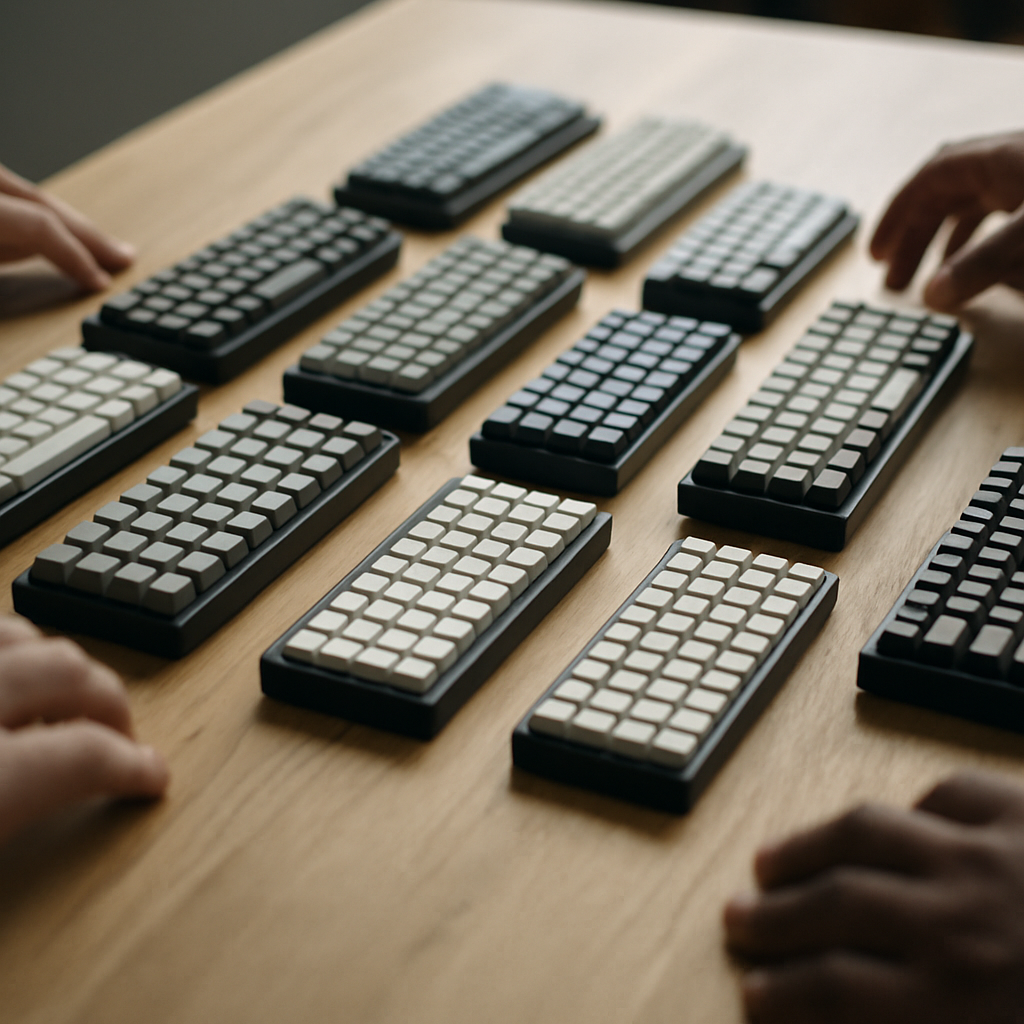
At every keyboard meetup there is a table that stops people mid-stride. On it sits something that barely qualifies as a keyboard by supermarket standards: forty-odd keys, no number row, sometimes arranged in a perfect grid like a tiny typewriter designed by an architect. The owner will be smiling, because they know the question that is coming. Yes, they type on it every day. No, they do not miss the other keys. And no, you probably will not understand until you try.
The Case Against Keys
The logic of small layouts starts with an uncomfortable observation: most of a full-size keyboard is wasted space. Studies of typing behaviour and simple self-observation agree that the number pad, the function row, and the navigation cluster see a fraction of the traffic that the alphas do. Meanwhile, your right hand travels a small marathon every day reaching for arrows and Backspace.
Forty percent boards respond by amputating everything non-essential and moving the survivors closer. Numbers, symbols, and navigation relocate to layers — alternate maps of the same physical keys, reached by holding a thumb key the way you already hold Shift. The result is a keyboard where no finger ever travels more than one unit from home row. Once the layers are in your muscle memory, the sensation is uncanny: the keyboard seems to shrink to the size of your hands.
Ortholinear: The Grid as Ideology
Ortholinear layouts attack a different piece of inherited design. The staggered rows of a normal keyboard exist because typewriter levers needed clearance — a mechanical constraint that died a century ago and somehow still shapes every laptop on earth. Ortho boards align keys in straight columns, matching the way fingers actually move: up and down, not diagonally.
The Planck, the hobby's most famous ortho board, combines both ideas — a 40 percent grid of 47 keys that fits in a jacket pocket. Typing on one for the first time is humbling; your fingers keep reaching for stagger that is not there. But converts describe a satisfying click of alignment after a week or two, as if the keyboard finally agreed to meet the hand halfway.
Why Builders Love the Constraint
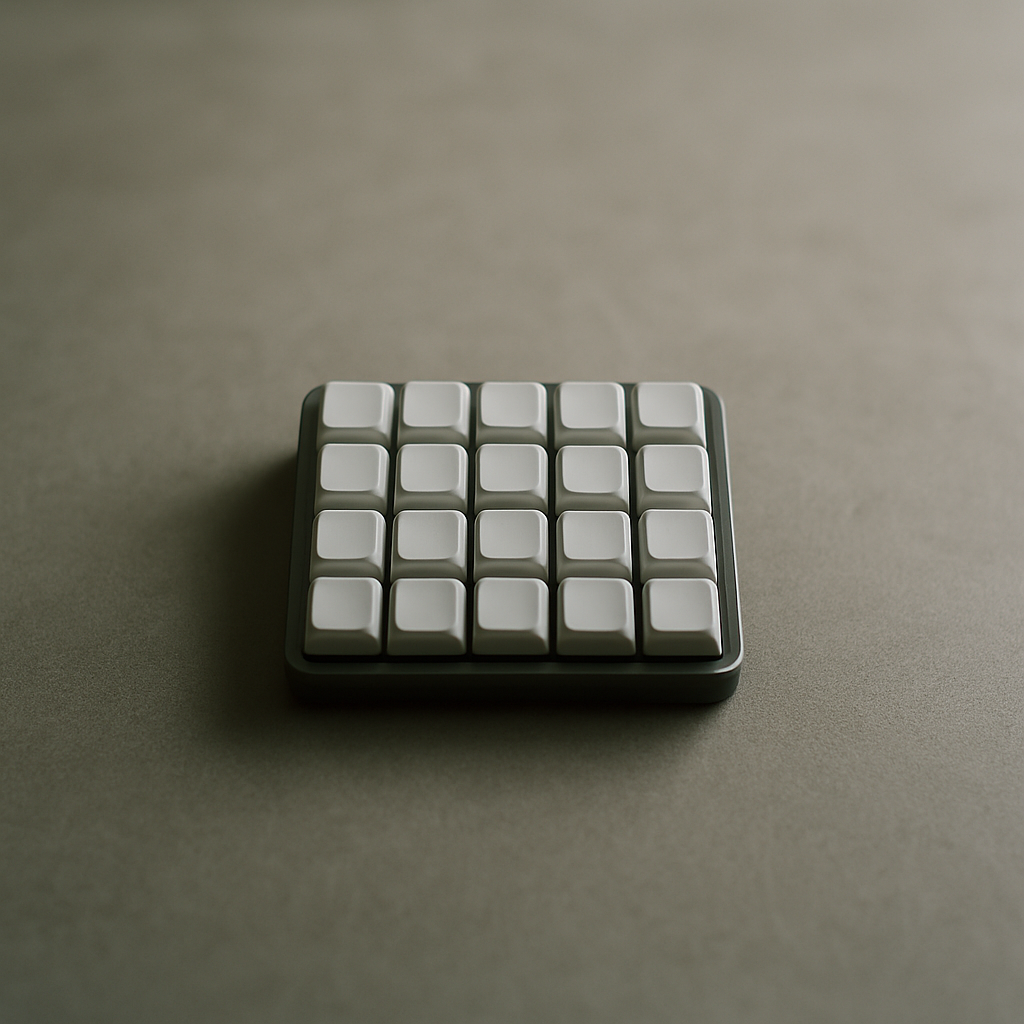
Beyond ergonomics, small boards have become a canvas for craft precisely because they are constrained. Fewer keys means a keymap must be designed, not accepted — every builder of a 40 percent effectively becomes an interface designer, deciding where Backspace lives and which thumb earns the Enter key. Communities trade keymaps the way cooks trade recipes, and refining your personal layout over months is half the pleasure.
The physical builds reward attention too. Small boards are inexpensive to fill with premium switches, quick to hand-wire, and friendly to experimental cases in wood, acrylic and 3D print. Many builders who would never risk a costly full-size custom will happily prototype three different 40 percent ideas in a year. The format is to keyboards what the haiku is to poetry: a strict form that concentrates creativity instead of limiting it.
The Honest Downsides
Small layouts demand a real investment. The first week is slow and occasionally infuriating; spreadsheet-heavy work without a number pad requires either a well-designed number layer or a separate macropad. Shared computers become awkward, because nobody else can type on your board — and your muscle memory will stumble on theirs. Some users plateau at a typing speed slightly below their full-size best and decide the trade is not worth it.
The community is refreshingly honest about this. The standard advice is to keep your old board within reach for deadlines, learn the new layout in low-stakes sessions, and give it three weeks before judging. Most people who last three weeks never go back.
A Different Definition of More
The small-layout movement makes a quietly radical claim: that a better keyboard might be one with less of everything except intention. Fewer keys, chosen carefully. Shorter travel, mapped deliberately. A grid instead of a stagger, because the reason for the stagger died with the typewriter. Whether or not you ever daily-drive a 40 percent, the questions it asks are worth sitting with. What are all these keys for? Who decided where they go? And what would you build if you had to justify every single one? In a hobby devoted to craft, there may be no purer exercise than that.