Split Decisions: How Ergonomic Keyboards Became the Craft Community's Next Obsession
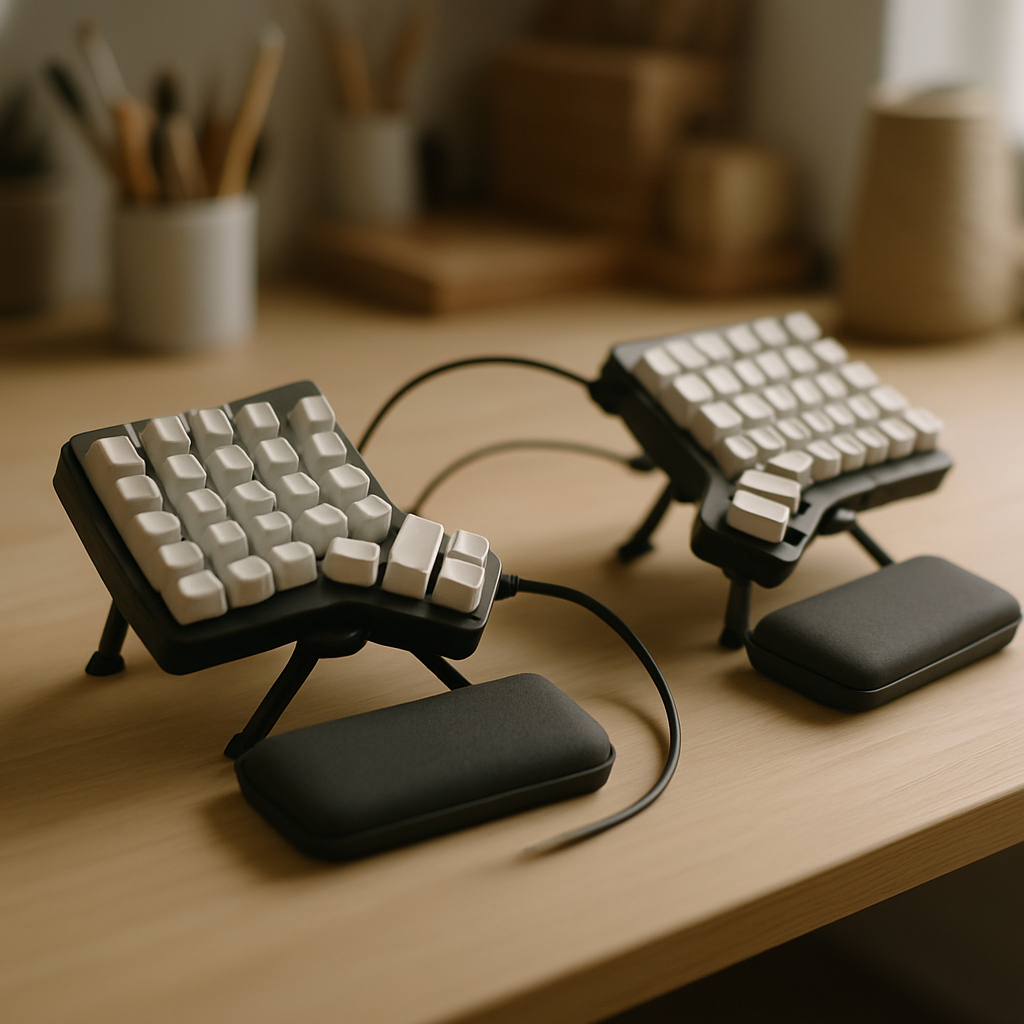
For years, the custom keyboard scene and the ergonomic keyboard scene lived in separate houses. One chased sound signatures and anodised aluminium; the other chased tenting angles and tendon relief, usually in beige plastic. Then the two communities discovered each other, and the result — hand-built split keyboards with premium switches, custom firmware and genuinely beautiful cases — has become one of the most vibrant corners of the hobby.
The Problem With Typing Straight
The conventional keyboard asks your body to do something slightly unnatural for hours at a stretch. To place both hands on a single narrow rectangle, your wrists bend outward, your forearms rotate flat, and your shoulders roll inward. None of these positions is dramatic on its own; the trouble is repetition, eight hours a day, for a career.
Split keyboards dissolve the rectangle. With two independent halves, each hand gets its own board, positioned at shoulder width and angled to keep the wrists straight. Add tenting — tilting each half so the thumbs rise — and the forearms relax out of full pronation. People who arrive at splits through wrist pain often describe the first properly positioned typing session as a revelation: the discomfort they assumed was normal simply is not there.
From Medical Device to Maker Project
Commercial ergonomic boards have existed for decades, but the current wave is different because it is open source. Designs like the Corne, the Lily58, the Sofle and the Kyria are published freely: PCB files, case models, build guides and firmware, all downloadable. Anyone can order the boards from a fabrication service, source switches and controllers, and solder a pair of halves at the kitchen table.
That openness turned ergonomics into a craft movement. Builders remix published designs, adjusting thumb cluster curves or column stagger to fit their own hands, then publish the remix in turn. Cases appear in walnut, brass, carbon fibre and translucent acrylic. The Corne alone exists in hundreds of variants — a folk tradition in PCB form, evolving through thousands of individual builds.
Column Stagger and the Thumb Revolution
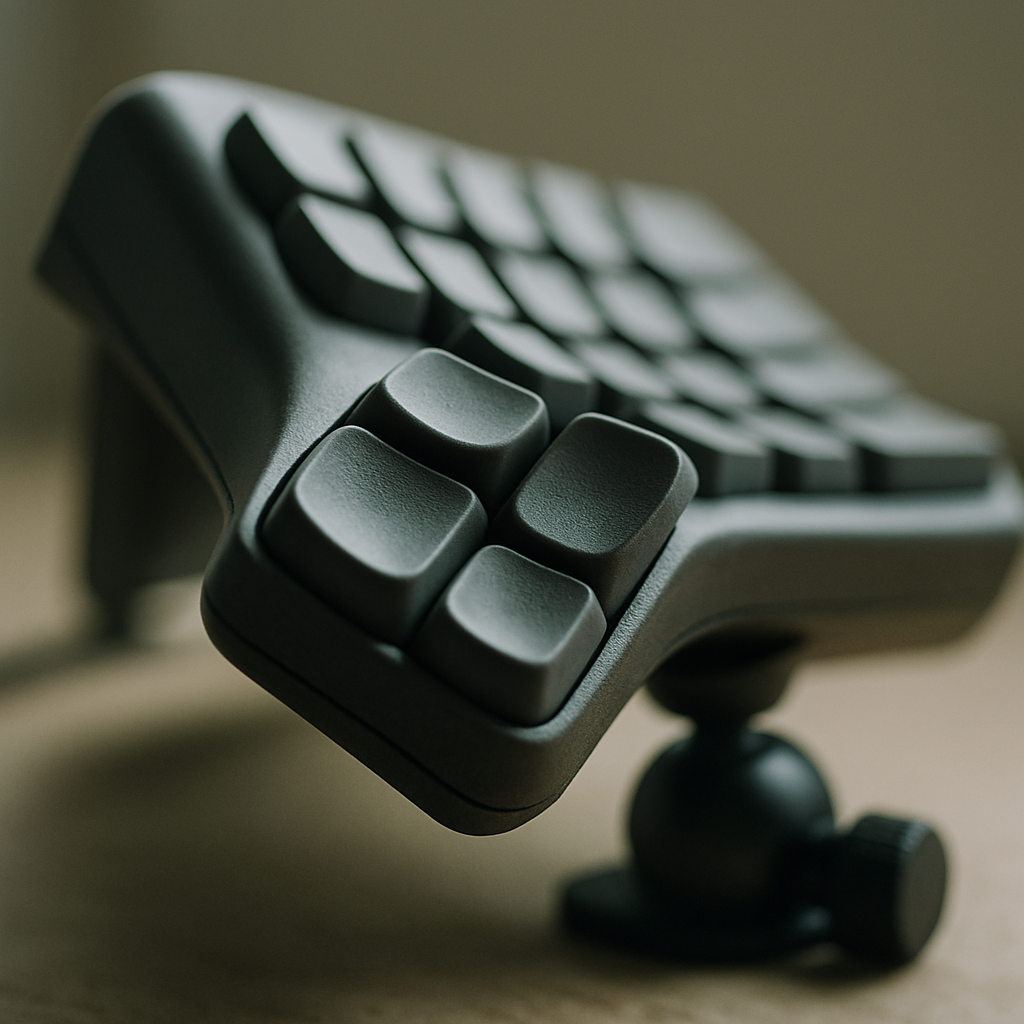
Most splits go beyond simply cutting a keyboard in two. They stagger keys by column rather than by row, shifting each column vertically to match the differing lengths of the fingers — the middle finger's column sits higher than the pinky's. After a short adjustment period, the effect is that keys seem to fall exactly where fingers land.
The other signature idea is the thumb cluster. On a standard board, two powerful thumbs share a single space bar — a spectacular waste of talent. Split designs give each thumb an arc of two to four keys, absorbing Enter, Backspace, layer shifts and modifiers. Rehoming the hardest-working functions from the weakest fingers to the strongest is arguably the single best idea in modern keyboard design, and it is almost entirely a community invention.
What It Costs to Switch
Honesty matters here: the transition is real work. Column stagger breaks old muscle memory, and most people type noticeably slower for one to three weeks. Splits with fewer keys add the learning curve of layers on top. There is also the desk-logistics question — two halves, a linking cable, possibly tenting legs — and the social one, since a colleague borrowing your keyboard will type exactly one bewildered sentence.
The community's collective advice has stabilised: transition during a calm work period, keep the layout as close to familiar as possible at first, and change one variable at a time. The payoff, by broad consensus, arrives quietly — not as a speed increase, but as the absence of end-of-day ache you had stopped noticing.
Where Comfort Meets Craft
What makes ergonomic splits so compelling for builders is that every choice serves the body. A tenting angle is not an aesthetic flourish; it is a decision about your own forearms. A thumb cluster layout is a theory about your own hands, tested every working day. The feedback loop between making and using is tighter than anywhere else in the hobby.
There is something fitting about the fact that the keyboard community's most practical branch is also one of its most creative. Splits prove that craft does not have to choose between beauty and purpose. The best builds on those meetup tables now do both: they turn heads, and then they quietly take care of the hands that made them.