The Quiet Ritual of Switch Lubing: Why Builders Spend Hours on a Job Machines Could Do
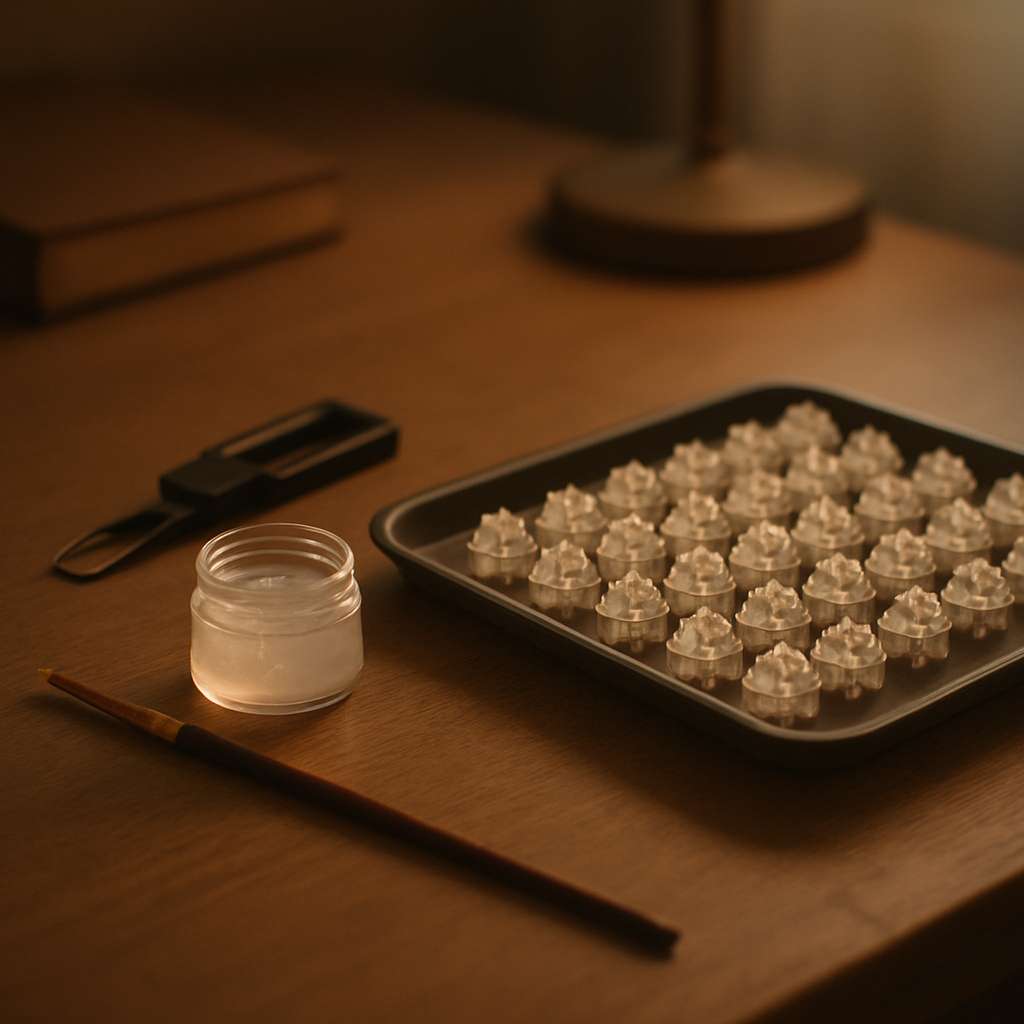
Ask any custom keyboard builder what they were doing last Sunday afternoon, and there is a fair chance the answer involves a small brush, a tub of Krytox, and ninety open switches arranged in neat rows on a lube station. To outsiders it looks like tedium. To the people doing it, switch lubing is something closer to meditation — a slow, repetitive craft that transforms both the keyboard and, oddly enough, the person building it.
What Lubing Actually Does
At a mechanical level, the job is simple. Every switch contains a stem sliding inside a housing, a spring compressing and rebounding, and metal leaves making contact. Each of these interactions produces friction and noise. A thin, carefully applied layer of lubricant smooths the stem's travel, silences spring ping, and rounds off the scratchy texture that even good factory switches can have.
The results are not subtle. A properly lubed linear switch feels like it is gliding on glass rather than dragging over sandpaper. The sound signature deepens and tightens. Reviewers often describe the difference as the single biggest upgrade you can make to a keyboard's feel — more noticeable than a new case, more transformative than fresh keycaps.
Why Not Just Buy Pre-Lubed Switches?
Factories do offer lubed switches, and machine application has improved enormously in recent years. But hand lubing persists for the same reason hand-finished furniture persists: control. A machine applies the same amount everywhere. A builder can go heavier on the spring, lighter on the stem legs, and skip the leaf entirely on tactile switches to preserve the bump.
There is also the matter of consistency to your own taste. Some builders like a thick, almost muted application; others want just enough to kill scratch while keeping the switch lively. That preference is impossible to communicate to a factory. It can only be dialled in by doing the work yourself, switch after switch, until your hands know exactly what "right" feels like.
The Tools of the Trade
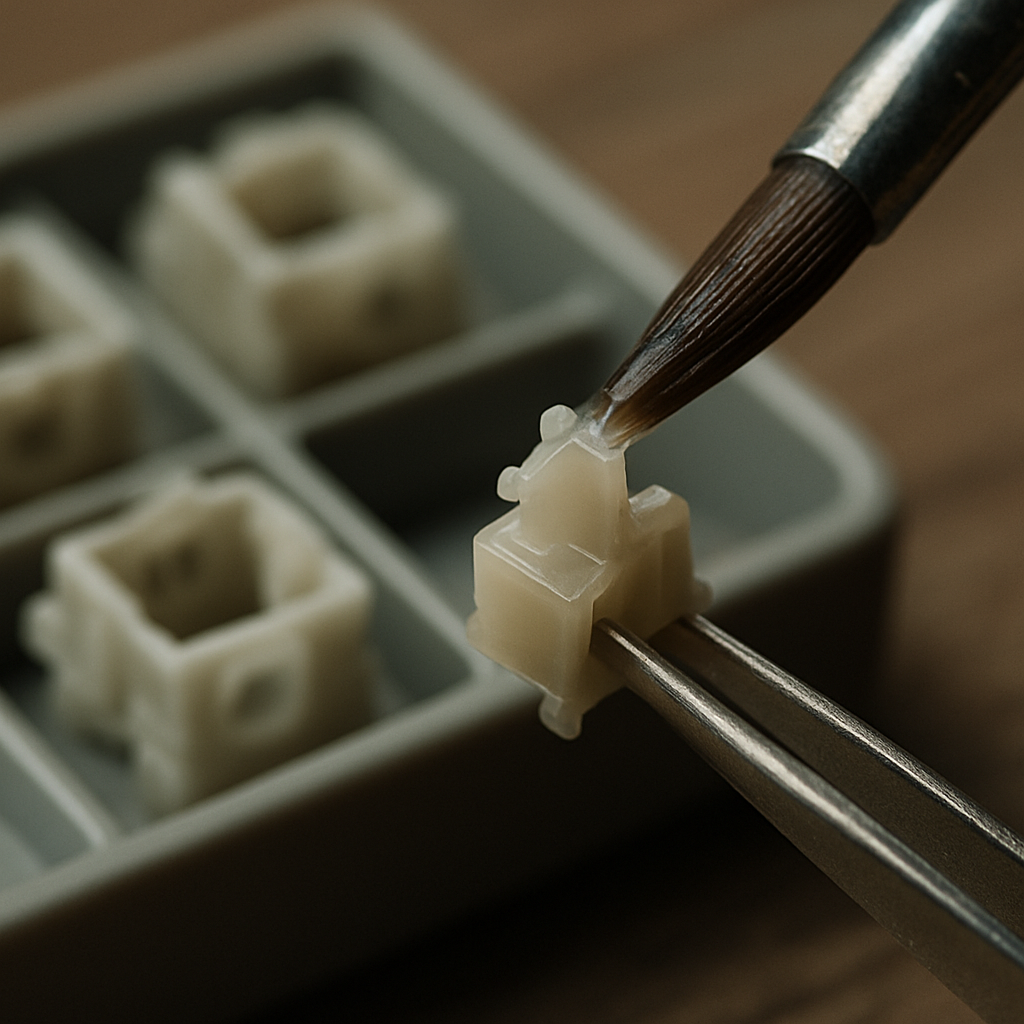
The kit is modest, which is part of the charm. A switch opener — a small aluminium block with angled teeth — pops housings apart in seconds. A fine brush, usually size 0 or 00, carries the lubricant. Krytox 205g0 dominates for linears; thinner oils like 105 handle springs, often applied by the wonderfully lazy method of bag lubing, where springs and a few drops of oil are shaken together in a zip-lock bag.
A lube station, essentially a tray with slots for stems and housings, keeps the disassembled parts organised. Tweezers, a stem holder, and good lighting complete the setup. The whole kit costs less than a single premium keycap set, yet it unlocks a skill that improves every keyboard you will ever build.
The Meditative Middle Hours
Here is the part nobody warns you about: lubing a full board of ninety or more switches takes three to five hours. Open, brush, reassemble. Open, brush, reassemble. And somewhere around switch thirty, something shifts. The motions become automatic, the mind quiets, and the task turns into a kind of moving stillness that people usually pay for in yoga studios.
Builders talk about this openly. Lubing sessions become podcast time, album time, or simply silence time. In a hobby that lives on group buy hype and interest checks, the lube station is where the pace finally slows down. There is a growing appreciation in the community that this unglamorous middle stage — not the unboxing, not the sound test — is where the actual relationship with the keyboard gets built.
Learning to Accept Imperfection
Every builder over-lubes their first batch. Stems come out sluggish, tactile bumps vanish, and the only fix is to open everything again and wipe it down. It is a rite of passage, and a useful one. Lubing teaches restraint: the best application is the one you can barely see, a whisper of lubricant rather than a coat.
It also teaches acceptance. Across ninety hand-lubed switches, a few will inevitably feel slightly different from their neighbours. Chasing perfect uniformity is a path to madness; experienced builders learn to aim for "consistently excellent" rather than "identical," which is, when you think about it, the honest standard of all handcraft.
A Small Job Worth Doing Slowly
Switch lubing sits at the heart of what makes custom keyboards a craft rather than a shopping habit. It is cheap to start, slow to master, and impossible to outsource without losing something. The hours spent hunched over a lube station are not wasted time between ordering parts and typing on the finished board — they are the point. In a world that automates everything it can, choosing to do a repetitive job slowly and well is its own quiet statement.