Rescuing the Beige Giants: A Guide to Vintage Keyboard Restoration
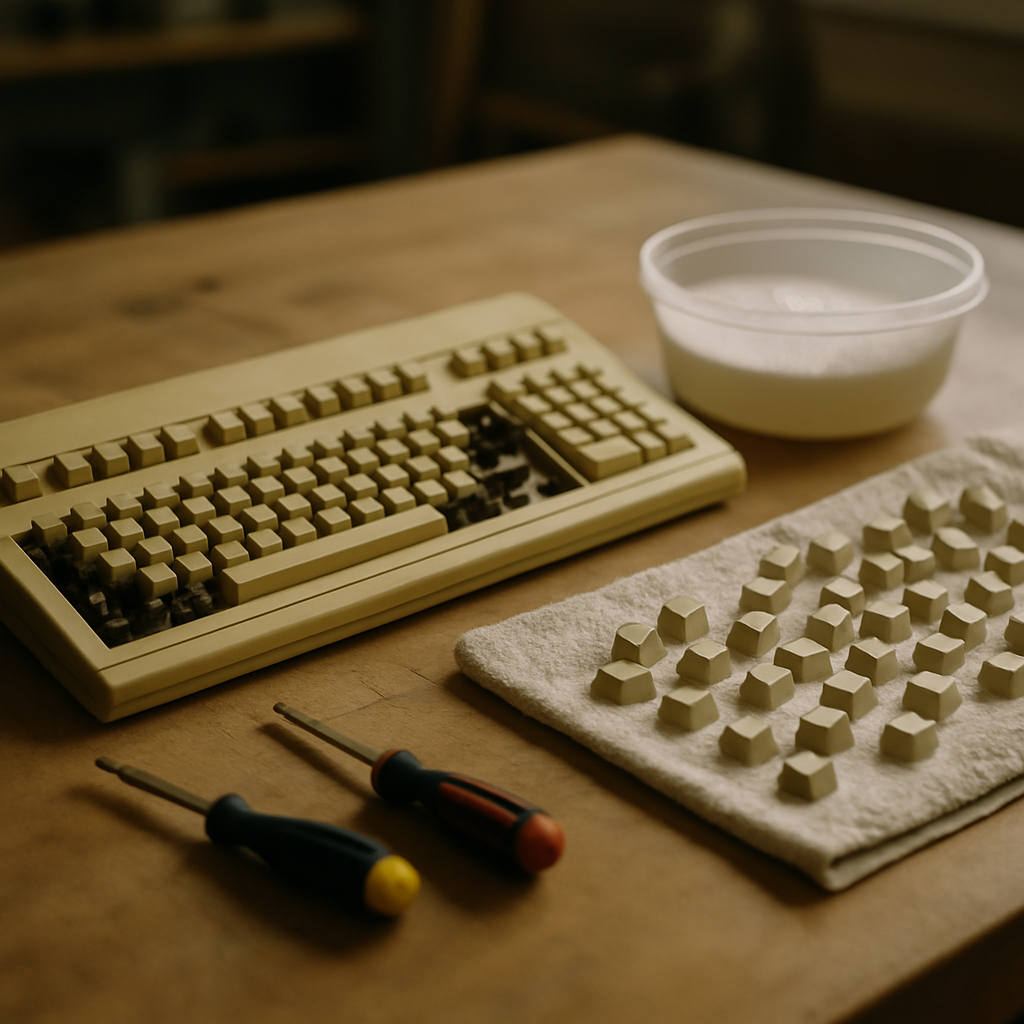
In attics, office basements and the dustier corners of online marketplaces sit thousands of keyboards that were built to outlive their owners. IBM Model Ms with their thunderous buckling springs. Apple Extended Keyboards humming with orange Alps switches. Terminal boards from companies that no longer exist, wired with protocols no modern computer speaks. To most people they are e-waste. To a growing community of restorers, they are the hobby's most rewarding project: keyboards with history, waiting for a second life.
Why Old Boards Are Worth Saving
The practical argument first: many vintage keyboards simply feel extraordinary. Buckling spring switches, capacitive Topre ancestors, and the enormous Alps family produce tactility that modern MX-style switches imitate but rarely match. These mechanisms were engineered in an era when a keyboard was a serious capital purchase, expected to survive decades of institutional abuse — and survive they did.
Then there is the historical argument. A 1987 Model M is an artefact of computing culture, as much as an early Macintosh or a rotary phone. Restoring one preserves not just an object but a way of building things: steel plates, thick PBT keycaps, mechanisms serviceable with ordinary tools. In a hobby increasingly defined by pre-orders and renders, vintage boards offer something no group buy can — provenance.
The Hunt
Restoration begins with acquisition, and the acquisition is half the fun. Estate sales, office clear-outs, university surplus auctions and flea markets still surface treasures at kind prices, though the famous models now command real money online. Seasoned hunters learn the tells: the part-number formats of desirable Model M variants, the difference between complicated and simplified Alps sliders, which beige rectangles hide mechanical switches and which conceal disappointing rubber domes.
The golden rule is to photograph everything before buying when possible — and to accept that some gambles fail. Every restorer owns at least one board bought as "probably mechanical" that turned out otherwise. It is tuition.
The Deep Clean
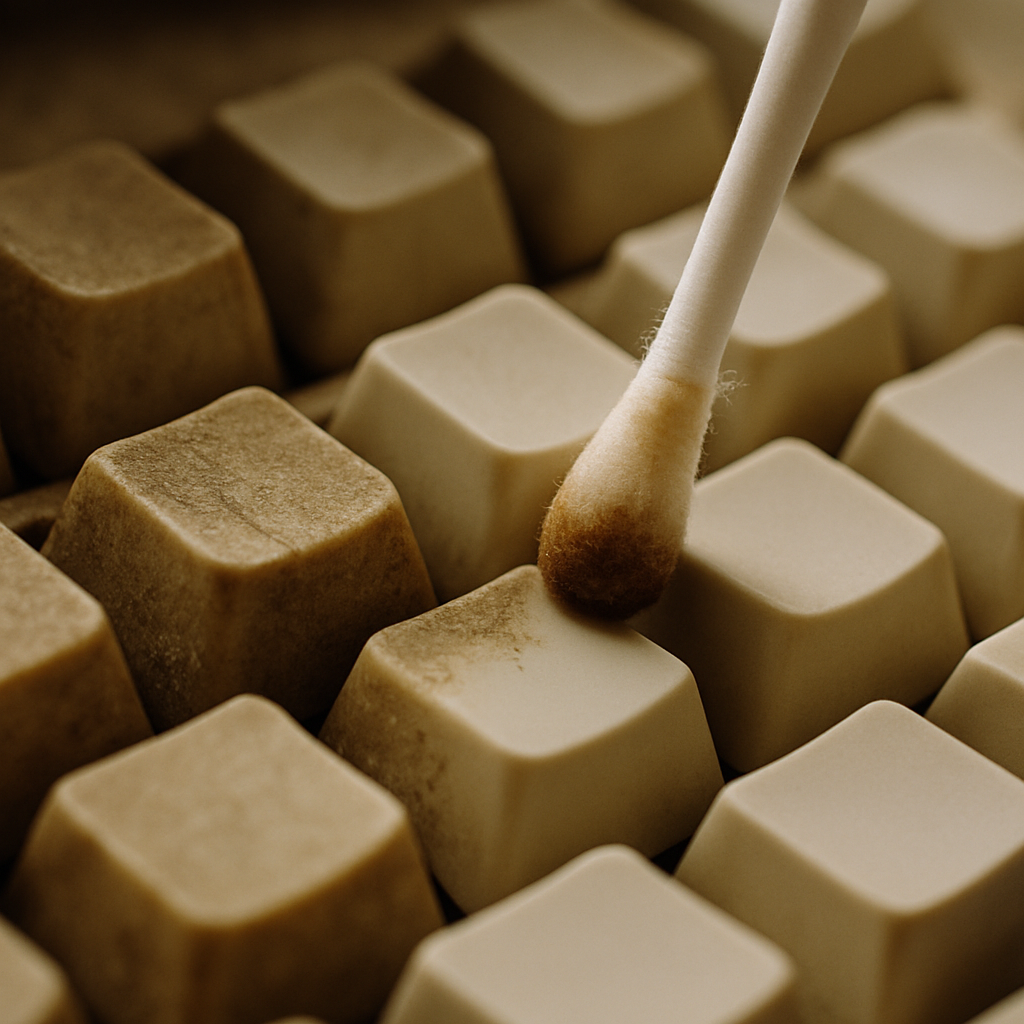
Decades of office life leave layers: dust felted between switches, mystery residue on caps, the archaeological record of a thousand lunches. The standard protocol is methodical. Keycaps come off and go into a warm bath with denture tablets or diluted dish soap — an oddly beloved trick that lifts grime without harming legends. The case gets disassembled and scrubbed. Compressed air and soft brushes clear the plate.
Yellowed plastic raises the community's most debated question. Retrobright — treating sun-yellowed ABS with hydrogen peroxide and UV light — can restore original colour dramatically, but the results may not be permanent and the process slightly weakens plastic over time. Purists increasingly argue for leaving the patina alone: the yellowing is the object's biography. Both camps make good points, and the board's owner gets the final vote.
Repairs and the Conversion Question
Common ailments have well-documented cures. Model Ms suffer from deteriorating rivets that let the internal assembly loosen; the fix, a "bolt mod," replaces melted plastic rivets with tiny screws and yields a board tighter than it left the factory. Dead Alps switches usually respond to careful cleaning of the switchplate contacts. Corroded traces can be bridged with fine wire and patience.
Then comes connectivity. Most vintage boards speak AT, XT or terminal protocols, not USB. Converters built on inexpensive microcontrollers — flashed with community firmware like TMK or QMK descendants — translate the old signals losslessly, no modification to the board required. This is the restorer's preferred path: full modern function, zero harm to the artefact. Invasive conversions that gut original controllers are generally reserved for boards too damaged to preserve.
Type on Your History
The best part of keyboard restoration is that the finished piece is not a shelf queen. A restored Model M is a daily driver that happens to be older than many of the people typing on it, and it will likely outlast whatever computer it is plugged into this decade. There is a particular pleasure in answering email on a machine that once served a hospital records department or a university lab — a keystroke connecting your work to forty years of other people's.
Start small: one honest, dirty, working board from a local listing. Clean it properly, bolt-mod it if it needs it, converter-cable it into the present. Somewhere around the moment the springs start thundering again, you will understand why restorers say they never really finish — they just start hunting for the next one.